Prioritizing Features for Maximum Impact: Healthcare Software Product Strategy

When you think of the ‘most essential’ parts of your product, specific features may come to mind, foundational to its functionality. An important part of your product development is the ability to prioritize features, deciding what can wait and what is essential from the outset, while accounting for time, money, and effort.
Ideation and Brainstorming
Validation
Product Design and Planning
Development and Testing
Launch
Post-Launch Analysis
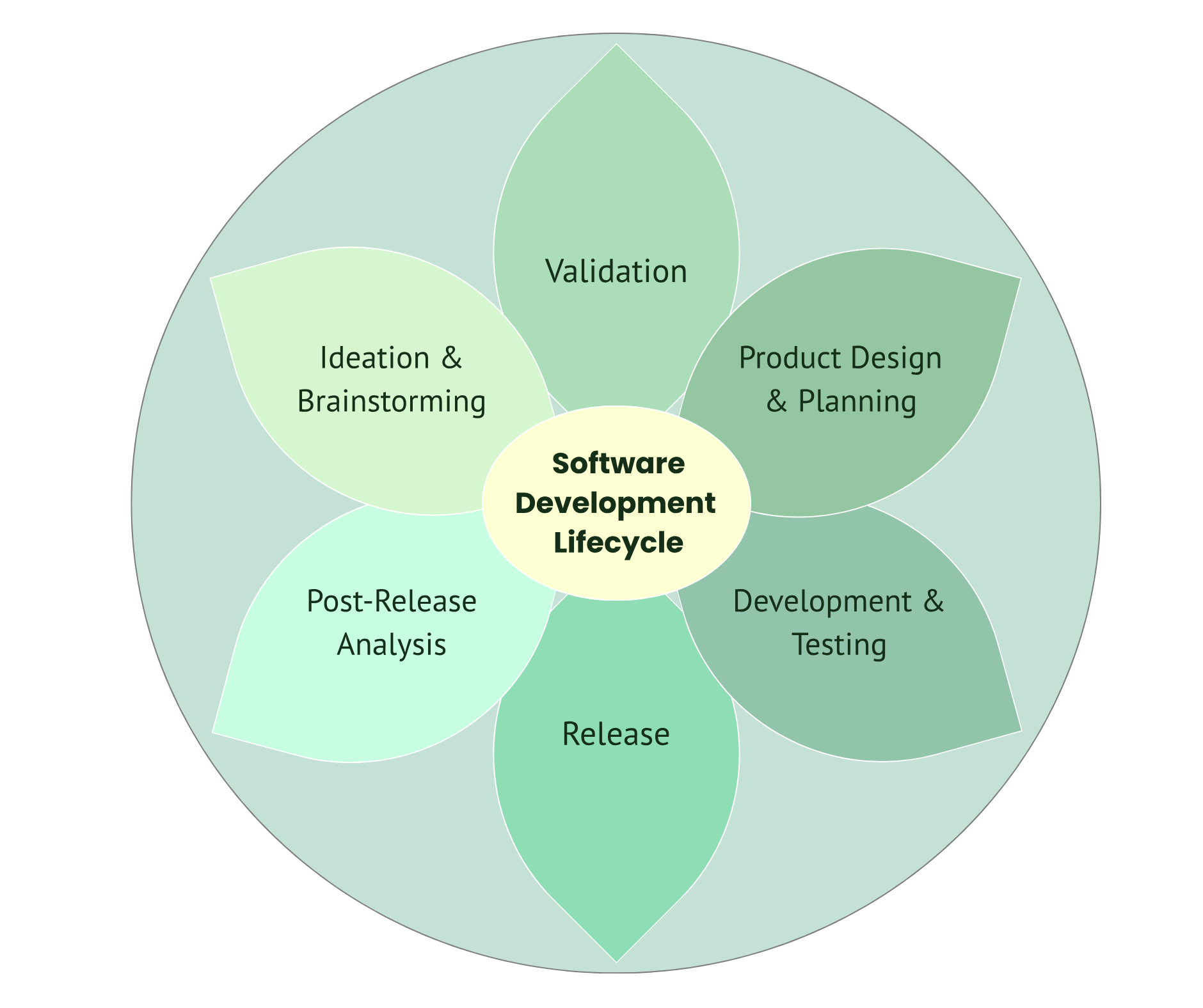
At the outset, the product development lifecycle begins with your idea and its validation in the marketplace. Our last blog post outlined how to prepare for a successful development partnership once your product idea is solidified.
After ideation and validation in the marketplace, one must strategize and prioritize product features, determining what is essential - aka Product Design and Planning. This process is more than just creating a bullet list of features from most important to least important. Instead, this strategy must keep everyone who interacts with the potential product in mind, such as clinicians, patients, and stakeholders, documenting their path to maximize the impact of the software product.
Prioritizing Features: What Kind of Strategy to Adopt
Identifying User Needs
Ask yourself who will interact with the product. Identifying user needs and expectations before making your final prioritization decisions will enable a smoother workflow and decision-making.
Conducting market research is one way to understand which features will matter most to your users. Market research can be done in a number of ways, including user interviews, surveys, direct user feedback, and user lifecycle analysis. It’s important to understand market gaps and unmet needs from your future users. In combination with considerations of market size, business goals, and regulatory requirements, a clearer understanding will emerge for what is needed.
Many Models for Prioritizing Features
Numerous prioritization models exist (like RICE - Reach, Impact, Confidence, Effort; MoSCoW - Must Have, Should Have, Could Have, Won’t Have; and Kano - mapping customer satisfaction against investment). Each has inherent limitations when applied to healthcare, but their core frameworks can offer a valuable, adaptable, and beneficial structure for any development process.
The baseline structure of these models categorizes features by priority, with the top tier comprising ‘must-haves’ or ‘non-negotiables’ and the bottom tier comprising features that ‘can wait’. These tiers allow for critical thinking and stakeholder alignment.
Alternative models, such as Weighted Shortest Job First (WSJF), factor in time by weighing each job or feature against the estimated time required to complete it. Other models assess value versus effort, a sort of cost-benefit analysis, helping to weigh a feature's potential impact against the effort and money it will require.
Regardless of the methodology, the rule of thumb is to think about how a feature will impact the product - whether that’s through a design lens or a performance lens.
Make Tradeoffs
It needs to be said that prioritization of features involves making deliberate choices about what not to build. This can be complex, as essential needs like meeting regulatory requirements must sometimes be weighed against, or prioritized over, enhancements like usability or efficiency. Throughout this process, maintaining complete transparency and providing clear reasoning for all decisions is crucial.
Measure Success
At every step of the development process (including Prioritization), evaluation helps teams analyze and understand how specific processes or decisions have impacted the product. This creates an intentional learning curve for improving future work. Some strategies for measurement include:
Quantitative Measurement: Analyze performance metrics
Outcome Comparison: Directly compare the original goals (pre-release) to the actual results
Data-Driven Feedback: Utilize real data and user feedback to facilitate continuous learning, moving beyond simply measuring success or failure
Do It Again
Prioritization and evaluation should happen continuously, not just once. With each “increment” (a part of your software), the product team, the project team, and the development team need to ask themselves: Did we achieve the product goals? What did we leave on the table (backlog)? What’s the next priority? From each of those lists, continuous prioritization and learning occur.
What is ‘Impact’ in Healthcare?
In healthcare software, impact is defined by the real effects that features (and the actions taken through those features, along with their outcomes) will have on patients, clinicians, or other users. ‘High-impact’ software features are generally the ones to prioritize. They should facilitate and showcase measurable improvements in day-to-day healthcare work, offering operational efficiencies, steps toward a clinical goal, or improved workflows for providers. Impact must be measurable, even when it may not be immediately visible or innovative. Prioritizing workflows in a software feature that leads toward “impact” is one way to maximize the product value.
Healthcare software also operates within a regulatory environment, and so regulatory compliance should be prioritized. Compliance-first development ensures that regulatory requirements are met from the outset of the development process. You can read more about compliance-first development in our blog post, ‘Beyond Checklists: Real Compliance in an AI-Driven Dev Cycle’.
Common Mistakes & Drawbacks
While feature prioritization is crucial for product success, there are common mistakes and drawbacks worth considering.
For example, focusing too heavily on trending or exciting features in the marketplace can overlook fundamental user needs. Feature-rich products do not equate to high-impact products.
Prioritization can also become skewed when a single person or department dictates the development roadmap. Features that are important to specific stakeholders might not be what most users need, leading to user dissatisfaction and lower adoption. It’s crucial that all perspectives are considered and aligned.
The SRG Difference
At SRG Software, we strive for continuous improvement and complete transparency. YOUR goals are our goals, and we help you meet them by supporting processes that make them possible.
Our cross-functional teams - management, development, and testing - are designed to help you achieve your goals. Through agile methodologies, continuous improvement, solid documentation, rigorous testing, and transparent project management, we have the conversations you need to make the best decisions and develop the best product possible. This is why we have thrived for twenty years on project referrals; our process works.
Reach out to start the conversation!